| 1 |
 |
“...xiv
LIST OF ILLUSTRATIONS
PAGE
King’s House, Jamaica .... facing 268
From a photograph by E. Wells Elliott
The Entrance to Nelson’s Quarters at
Port Royal, Jamaica . . . „
From a photograph by A. C. Kelway
The Blue Hole, near Port Antonio, Ja- '
maica. ......................................
From a photograph by E. Wells Elliott
The Savane at Fort-de-France, Mar-
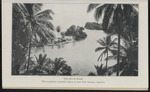
tinique ......................................
From a photograph by the Author
The Centaur Landing Munitions on
•" H.M.S.” Diamond Rock . .
From a coloured engraving by J. C. Stadler after
J. Eckstein, 1805
Part of the Town of St. Thomas . . „
From a photograph by the Author
The Ancient Morro Castle, Havana . „
From a photograph by Frank Oldrieve
The Massive Citadel Henri in Haiti .
The Kaieteur Fall, British Guiana . „
H.M.S. Renown in the Gaillard Cut,
Panama Canal . . • • • >»
272
280
306
310
31:6
346
366
384
424...”
|
|
| 2 |
 |
“...30 POCKET GUIDE TO THE WEST INDIES
of interest. With the sun glinting on their silvery wings,
they look like dragon-flies as they leap from the sea in
shoals near the bows of the ship. That they actually
fly cannot be denied, but their flight appears to be like
that of the original “ glider ” aeroplane, requiring some
considerable impetus to give it a start, which is soon
expended. The fish forces its way through the water,
and, rising from it, is carried forward and skims the
surface, gaining momentum each time it touches the
waves. The size of the fish is that of a small herring
and there are always many old travellers who will tell
one how they have seen them fly on board the ship,
though really this can only occur on sailing ships, whose
gunwales are near the water—as described by Jeaffreson
in 1676 (see next page)—unless, perhaps, the fish with
unerring aim flies through the port-hole.
The first sight of the island of Barbados is, as a rule,
obtained overnight...”
|
|
| 3 |
 |
“...54 POCKET GUIDE TO THE WEST INDIES
The South Road round the Sound passes many points
of interest, the most notable of which perhaps is the
Devil’s Hole, now the property of the Trott family.
This pool, which is also known as the Grouper’s Grotto
and Neptune’s Grotto, is stocked with fish whose every
movement can be plainly seen in the remarkably clear
water, which rises and falls with the tide, being connected
with the sea and not with the Sound. At the eastern
comer of the Sound is the old property known as
Paynter’s Vale, and above it rises Paynter’s Hill,
which is very well worth climbing, for the sake of the
superb views that it affords of the Sound on one side
and Castle Harbour on the other. Near by is Shark’s
Hole, another interesting cave .over .which the road
passes, and proceeding farther one comes to the famous
Walsingham Caves, which well repay a visit. It was
at Walsingham that Ireland’s poet, Tom Moore, resided
for a few months when he was Registrar of...”
|
|
| 4 |
 |
“...BERMUDA
55
called Blue Hole at which it starts is one mile and 1,430
yards, and the cost of its construction was £32,000,
towards which the Imperial Government contributed
£8,500. For the first part of the distance the causeway
crosses the open harbour like the bridges from Mestre
to Venice. It is then carried over Long Bird Island,
which is connected with Stocks Point on St. George’s
Island by a swing-bridge. This when open affords
access to St. George’s Harbour from the north. From
Stocks Point the road to the old capital leads round
Mullet Bay and under the guns of the old Fort George,
affording superb views of characteristic Bermudian
scenery.
St. George’s, like the island on which it stands, owes
its name to Sir George Somers. It is an exceedingly
picturesque town of 1,500 inhabitants which was founded
in 1612, and incorporated in 1797. Until 1815, when
the seat of Government was transferred to Hamilton,
it was the capital of the Bermudas. St. George’s
stands...”
|
|
| 5 |
 |
“...58 POCKET GUIDE TO THE WEST INDIES
Colson, aged 61 years (1836), and Henry Hall Hayward,
aged seven months (1833). The epitaph ends :
Heaven gives us friends to bless the present scene
Resumes them to prepare us for the next
All evils natural, are moral goods,
All discipline, indulgence, on the whole.
Many pleasant walks and expeditions can be enjoyed
from St. George’s, notably to the Barracks, which com-
mand a very fine view, and to St. David’s Island.
Returning to Hamilton, the South Road can be joined
either at Tucker’s Town or at the Devil’s Hole. At
Tucker’s Town the road traverses the Mid-Ocean Golf
Course (see page 44). The beach and natural arch at
Tucker’s Town merit inspection. The first place of
interest reached is Peniston’s Pond (2 miles), a brackish
lake apparently separated from, but really communi-
cating with, the sea by underground channels. Near
by is the historic Spanish Rock inscribed :
F+
1543
which is shown to prove that the Portuguese...”
|
|
| 6 |
 |
“... tomatoes, sisal
hemp and Cascarilla bark. An American company holds con-
cessions for cutting pine lumber in Abaco, Andros, and Grand
Bahama. Bahamas pitch pine is the hardest and the heaviest
known in the world. For flooring it is unequalled, but it is said
that carpenters object to it as it is impossible to drive a nail
into it without first boring a hole....”
|
|
| 7 |
 |
“...THE BAHAMAS 63
There is a Government wireless station near Fort Charlotte
and seventeen short range ones on the “ out islands,” the whole
colony being thus linked up.
SPORTS. The favourite pastimes in Nassau, are Lawn tennis
and Golf. Tennis is played on grass and " dirt " courts, numerous
tournaments being held in winter under the auspices of the
Nassau Lawn Tennis Club and the New Colonial and Fort
Montagu Beach Hotels. The Bahamas Country Club has pic-
turesque 9-hole Golf links near the New Colonial Hotel, and
there is an 18-hole course a little to the west of the town. Court-
golf, played over a miniature course with putters and irons only,
was originated in Nassau by Dr. Casselberry. There are several
Cricket clubs and Rugby Football is played during the winter.
Duck Shooting can be indulged in on Lakes Cunningham and
Killarney (New Providence) from November to April and on a
number of the other islands, where also wild pigeon afford good
sport in the summer...”
|
|
| 8 |
 |
“...BARBADOS
73
a stock of pigs. It was not until 1605 that the British took
possession of the island. In that year the crew of a vessel called
the Olive Blossom, fitted out by Sir Oliph Leigh with stores and
settlers for Guiana, landed on the leeward coast and erected a
cross, inscribing on a tree near by, " James K. of E. and of this
Island.” The actual settlement was not, however, effected until
twenty-one years later, when Sir William Courteen, a wealthy
London merchant, receiving glowing accounts of Barbados
from the crew of one of his vessels, which had been compelled,
through stress of weather, to touch there on the way from
Brazil, decided to equip an expedition and send out settlers to
it. This he did under the protection of the Earl of Marlborough,
who received the promise of a patent which covered Barbados.
Sir William Courteen’s ship, the William and John, reached
Barbados in 1626 with about forty emigrants, who landed and
founded Jamestown or Hole Town, near...”
|
|
| 9 |
 |
“...76 POCKET GUIDE TO THE WEST INDIES
SPORTS. There are many Cricket and Football clubs. Lawn
tennis is popular, and there are several clubs where it is played,
notably the Savannah. Polo is played twice a week on the
Garrison Savannah ; and under the auspices of the Barbados
Turf Club, which is affiliated to the Jockey Club of England,
race meetings are held periodically. They attract immense
crowds to the Savannah.
There are several private Golf links and a 9-hole course at
the Rockley Club (see below). Sailing boats can be hired.
Good line Fishing can be had, as well as trolling for barracouta
with rod and line from sailing boats; and the Bathing is excellent
at the Aquatic Club, Villa Franca, Warsaw, Worthing, the Crane,
and Freshwater Bay.
CLUBS. The Bridgetown Club, on the top floors of the hand-
some building of the Barbados Mutual Life Assurance Society
in Beckwith Place—one of the best social clubs in the West
Indies—is open to visitors on introduction by a...”
|
|
| 10 |
 |
“...BARBADOS
105
Richard Blome, writing in 1672, says that these caves
were
often the sanctuaries of such negro-slaves that run away, in
which they oft-times lie a good while ere found out, seldome
stirring in the day time. . . . And it is supposed that these
caves were the habitations of the natives.
Richard Ligon confirms this. In his “ True and Exact
History of the Island of Barbadoes,” published a year
later, he says:
The runaway negres, often shelter themselves in these Coverts,
for a long time, and in the night range abroad the Countrey,
and steale Pigs, Plantins, Potatoes, and Pullin, and bring it
there ; and feast all day upon what they stole the night before ;
and the nights being dark and their bodies black, they escape
undiscern'd.
These thieves, it appears, used to be hunted down
successfully by “ Liam Hounds.”
The Hole or Hole Town, St. James, on the leeward
or west coast (7 miles ; \ hour by motor-car), has little
of interest except perhaps the old Fort...”
|
|
| 11 |
 |
“...io6 POCKET GUIDE TO THE WEST INDIES
The column marks the spot where the English in
the Olive Blossom first landed in 1605, and also the
landfall of Sir William Courteen’s settlers, under Richard
Deane, 1626. The town was afterwards called James-
town in honour of James I.
St. James’s Church, Hole Town, boasts an old bell
inscribed " God Bless-King William 1696,” also a font
dated 1684, and very old communion plate. The bell
was brought away by General Sir Timothy Thornhill
from Martinique after a successful attack on that island.
A curiously worded inscription on a monument to
the wives of Sir John Gay Alleyne, whose family resided
for generations at Porters, should be read.
Porters Wood (8 miles ; | hour by motor-car), with
jts flock of wild monkeys, which gaily disport themselves
in the mahogany trees, and St. James’s Church, are both
very well worth attention. At Porters, once the resi-
dence of Dudley Woodbridge, Director-General of the
Assiento Company (see...”
|
|
| 12 |
 |
“...158 POCKET GUIDE TO THE WEST INDIES
feet, while in the foreground the deep blue of the water,
dotted with the trim httle white sloops which ply to St.
Vincent and the Grenadines, completes a charming
picture.
On November 18th, 1867, a remarkable occurrence
took place in the Carenage. Between 5 and 5.20 p.m.
the water suddenly subsided about 5 feet, exposing a
reef, and the water over the “ Green Hole,” a spot
between the Spout, the old watering-place for ships,
and the opposite shore on the north, began to bubble
furiously and to emit sulphurous fumes. The sea then
rose 4 feet above its usual level and rushed up to the
head of the Carenage. This was repeated several times,
and the Green Hole, which was very deep, was com-
pletely filled up. The wave rushed up the northern coast
as far as Gouyave, and at Dougaldston the bridge at the
mouth of the river was covered and the cane-fields
inundated. Seismic phenomena were witnessed at the
same time in St. Thomas and...”
|
|
| 13 |
 |
“...158 POCKET GUIDE TO THE WEST INDIES
feet, while in the foreground the deep blue of the water,
dotted with the trim httle white sloops which ply to St.
Vincent and the Grenadines, completes a charming
picture.
On November 18th, 1867, a remarkable occurrence
took place in the Carenage. Between 5 and 5.20 p.m.
the water suddenly subsided about 5 feet, exposing a
reef, and the water over the “ Green Hole,” a spot
between the Spout, the old watering-place for ships,
and the opposite shore on the north, began to bubble
furiously and to emit sulphurous fumes. The sea then
rose 4 feet above its usual level and rushed up to the
head of the Carenage. This was repeated several times,
and the Green Hole, which was very deep, was com-
pletely filled up. The wave rushed up the northern coast
as far as Gouyave, and at Dougaldston the bridge at the
mouth of the river was covered and the cane-fields
inundated. Seismic phenomena were witnessed at the
same time in St. Thomas and...”
|
|
| 14 |
 |
“... by negro boatmen, and though the
journey affords mild excitement it is unattended by
danger.
The Blue Hole, a lagoon of exquisite beauty, does not
belie its nam§ and is a never-failing source of wonder to
visitors, and enjoyable drives can be taken to Moore
Town, the site of a Maroon settlement (see page 287)
and the Swift River.
From Port Antonio, Montego Bay, the second town of
Jamaica, on the north coast near the west end of the
island, can be reached by the coast road by motor-car
in about eight hours (distance 128J miles). The first
fflace of importance passed is Annotto Bay (28J miles)
on the right bank of the mouth of the Wag Water
(a corruption of the Spanish Agua alta) river, a shipping
port on the railway fine between Kingston and Port
Antonio. The quaint belfry of the Chapel in the main
street, which resembles an exaggerated meat-safe,
should be noticed.
Port Maria (44i miles) is a thriving port much fre-
quented by fruit steamers, which are loaded here...”
|
|
| 15 |
 |
“...mm
zo
m
* m
mm
mm
ÊÊt-i ÊÊ
THE BLUE HOLE
This exquisitely beautiful lagoon is near Port Antonio, Jamaica....”
|
|
| 16 |
 |
“...3i6 POCKET GUIDE TO THE WEST INDIES
Councils in each of the two municipalities. In St. Thomas
and St. John there are n elected and 4 nominated members, I
and in St. Croix 13 elected and 5 nominated members.
ACCOMMODATION. The Grand Hotel. Board and lodging, j
$3.00 {12s. 8d.) per day. Taylor’s " 1829 " Hotel. Board and 1
lodging, $2.50 (105. 5d.) per day.
COMMUNICATIONS. St. Thomas is the first port of call of j
passenger steamers from New York (see Appendix I). Steamers j
lie alongside the wharves and there is no landing fee. Motor- I
cars can be hired at reasonable rates ; also horses for riding.
SPORTS. There are two Lawn tennis clubs to which visitors j
are welcomed, and the Boating and Bathing to be enjoyed are j
above the average. Good Sea-fishing can be had in all the bays. I
The roads are excellent for Cycling. The Country Club has a
9-hole Golf course available for the use of visitors.
SIGHTS. Entering the harbour of St. Thomas by !
the narrow bottle-necked...”
|
|
| 17 |
 |
“...352 POCKET GUIDE TO THE WEST INDIES
delightful surf bathing to be enjoyed "there. The train
runs through some of the most attractive suburbs of
Havana, including Puentes Grandes, Buena Vista, and
Marianao town (population 9,332 ; nine miles). A more
pleasant route to the beach is by motor-car through
Vedado and Almendares, now beautiful suburbs.
Betweenj Almendares and Marianao is the Parque
Japones, which well repays a visit. The Casino has an
excellent restaurant and is well equipped with devices
for gambling. Evening dress is not de rigueur, but
sports clothes are banned. Close by Marianao is the fine
Oriental Park Race Track where races are held periodi-
cally from December to April. Near the beach the
palatial Havana Country Club with an 18-hole golf course
is situated. The head-quarters of the Havana Yacht Club
are also at the Beach.
An excursion train leaves Havana daily on the
Havana Central Railroad for the Providencia Sugar
Factory (36 miles), which can be...”
|
|
| 18 |
 |
“... are also several private courts.
Cricket is played from May to October, and there are several
native cricket and Football clubs. The Belize Golf Club, which
was established in 1900, has a 9-hole course, subscription
$1.26 (5s. 3d.) per month and $10.00 [£2 is. 8d.) entrance fee.
Polo is played about three days a fortnight from October to
March, by the members of the BeUze Polo Club, founded in
1895 (subscription $15.00 (£3 2s. 6d.) per annum and $7.50
(^1 us. 3d.) entrance fee), under HurUngham rules modified to
suit local conditions. Fishing is a pursuit which is not much
foUowed, though tarpon, cahpever, snapper, bass, mullet,
grouper, king-fish, and barracouta are plentiful. The sheltered
water between the mainland and the line of reefs about ten miles
to windward is admirably suited to saiUng....”
|
|
| 19 |
 |
“.... Kitts,
Nevis, and Montserrat, to the soil and climate of which the Sea
Island variety—a native of the first-mentioned island, as its
name, Gossypium barbadense, implies—is particularly well
adapted. This cotton differs from American upland cotton,
having a longer fibre or staple and being used for a different
purpose, such as making Brussels lace, chiffon, and other delicate
fabrics, as well as fine gloves, handkerchiefs, and sewing-cotton.
Moreover, it commands a much higher price.
It is estimated that there are from 15,000 to 20,000 acres under
Cotton cultivation in the West Indies, the quantity of lint
exported being approximately 6,000 bales annually.
Cotton is planted in August and September, just before the
rains, in order that dry weather may be obtained during the
period in which the crop is picked. It is best planted 20 inches
apart, in rows which are 5 feet apart, four seeds being planted
in each hole, 6 lbs. of seed per acre being thus used. As soon
as the...”
|
|
| 20 |
 |
“...442 POCKET GUIDE TO THE WEST INDIES
out, leaving the two strongest in each hole, and a fortnight
later the weaker of the two remaining plants is removed. This
is the critical period, as heavy rains or high winds may damage,
if not ruin, the crop. The picking is conducted by men, women,
and children, and expert labourers aré able to pick about ioo lb.
of seed-cotton per day. They hold the boll firmly with the left
hand and remove the seed-cotton with the right, the price usually
paid for this operation being Jd. to \d. per lb. gathered. The
cotton is then sunned until it is thoroughly dry, any that is
stained—and immature bolls—being removed, and any cotton
which has fallen to the ground and got mixed with earth or sand
is “ whipped,** a process which consists in striking handfuls of
seed-cotton with a whipping motion on wire netting. The seed-
cotton is then conveyed to the ginnery.
The first ginnery to be erected since the reintroduction of the
cotton industry was...”
|
|