| 1 |
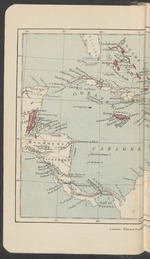 |
“...ar /
I % i ••..<» ’
'•AiupoUa.
'man
C^OTdi«flP‘
Jam ai
ƒ /Ambergris Cay
Trux£D
.& (rran'gf
i" 5 ¥ eTT7&
■■*................-i
|
ïvns'-1'" c a7r'&%oUVt
, ÖM itw vidence I.
Sicar»#S
•eytown,
-***9+1^
Gxilf of \
P an am a
London : Edward Sta»*...”
|
|
| 2 |
 |
“...Dutch West India Mail Service, de Ruyter Newayorknd
kade 125, Amsterdam), under contract with the
Netherlands Government for the conveyance of
mails. The steamers of this line sail from Amster-
dam and New York every fortnight, the ports of
call being Paramaribo (Dutch Guiana), George-
town (Demerara), Trinidad, Venezuelan ports,
Curasao, Jacmel (Hayti), Aux Cayes, Port au
Prince (Hayti), New York, and vice versa.
Fleet: — Prins der Nederlanden, 1923 tons;
Prins Frederik Hendrik, 2164 tons; Prins Man- *
rits, 1777 tons; Prins Willem I, 1765 tons; + +
Prins Willem II., 1621 tons; Prins Willem III.,
1664 tons; Prins Willem IV, 1713 tons, and
Prins Willem V., 1777 tons....”
|
|
| 3 |
 |
“...GENERAL INFORMATION
33
“ I have fought for Queen and Faith like a valiant
man and true; . . .
With a joyful spirit I Sir Richard Grenville die.”
After passing the Azores, awnings are put out,
md the first touch of the tropics begins to make
itself felt; cooler garments are donned, and the
officers of the ship appear in white suits. Soon
the Sargasso Sea is entered, and tourists will note, The
probably for the first time, the remarkable Gulf l^8*80
weed, which floats in a vast eddy or central pool
of the Atlantic between the Gulf Stream and the
Equatorial current. It was on entering this sea
that the crew of Columbus’ ship very nearly
mutinied, believing as they did that their vessels
had reached land, and were on the verge of
running on the rocks, though really the ocean
is here fully four miles deep. The origin of this
mass of weed is not known, but it presumably
was once attached to rocks, though it is now
propagated as it floats on the surface. In colour,
it is yellow, and it supports...”
|
|
| 4 |
 |
“...owner
was compelled to employ a certain number of
white servants to serve in the militia, and these
men helped to swell the population, while
Oliver Cromwell sent out many Irish prisoners,
I notably to Nevis and Montserrat; and Barbados
1 received a large influx of Royalists at the time
of the Commonwealth. Many English gentle-
men, Royalist officers and divines, were sent out
to the island and sold as slaves, and it is on
record that a number changed hands at a cost of
1500 lbs. of sugar per man! Their descendants,
known as “mean whites,” are still found there.
Even the ubiquitous Teuton is not omitted from
the list of those who have helped to populate
the islands, for in 1840 Mr. King imported twenty-
nine Germans into St. Lucia, while Syrians are
also found in Jamaica. In conclusion, a word
may be added about the term “Creole,” which
is believed by those who have not visited the
West Indies to apply to people of coloured
descent This is not the case. A creole is
any one actually born...”
|
|
| 5 |
 |
“...Propagation of the Gospel, in trust for the
maintenance of a convenient number of pro-
fessors and scholars, “ all of them to be under
the vows of poverty, chastity, and obedience;
who shall be obliged to study and practice
physic and chirurgery, as well as divinity;
that by the apparent usefulness of the former to
all mankind, they may both endear themselves to
the people and have the better opportunities of
doing good to men’s souls, whilst they are taking
care of their bodies.” At that time the planta-
tions were computed to yield a net income of
£2000 clear of all charges. The erection of the
college buildings was begun in 1716, and the
masonry was finished in 1721; but it was many
years before the college was completed, owing to
a debt due to the Society from the estates, which
was not cleared off until 1738. The stone used,
which is a conglomerate of limestone, was taken
from the hill behind the college, and the timber
was brought at Government expense, in ships of
the Royal Navy, from...”
|
|
| 6 |
 |
“...steps, and is surmounted with
battlements. The walls are immensely thick, and
well calculated to withstand hurricanes. In 1831
the outside of the house was being repaired, when
it was struck by the terrific cyclone of August xo,
and though the scaffolding was carried off by
force of the wind and deposited in the mill-yard
of the Three Houses Estate, three miles away, the
building was uninjured. The chief feature of the
interior is the handsome ceilings in plaster work,
which were fashioned by a man named Warren,
who was imported in the old slavery days as a
militiaman, when the planters were bound by law
to leaven their holding of slaves with a certain
number of white men. At the end of the long
drawing-room and dining-room there are handsome
mahogany columns made from trees grown in the
island. The large looking-glasses, now dulled by
age, convey some idea of the magnificent scale on
which the house was furnished, and it is recorded
that it was filled with priceless china and Chippen-
dale...”
|
|
| 7 |
 |
“...areas of cultivation are on the south
side, on which the slopes of the hills are less
steep than in the north. Scarborough (popula-
tion 2500), the capital of Tobago, is situated
at the south of the island, about 8 miles from
the south-west point. The only other town is
Plymouth, really only a village (population 1200),
on the north side, 5 miles from Scarborough.
Around the coast there are many excellent bays,
most of which are well sheltered and afford safe
anchorage with deep soundings. Indeed, Man-
o’-War Bay, a very spacious harbour, is said to
be capable of affording shelter to the whole of the
British fleet! What is most wanted for Tobago
is the introduction of capital and labour; given
that, there would be no reason why this beautiful
island should not regain a large portion at least
of its former prosperity.
The soil of Tobago is fertile and capable of industries,
growing a variety of tropical products. Sugar
is still the staple of the island, but cocoa, coffee,
cocoa-nuts, and nutmegs...”
|
|
| 8 |
 |
“...GRENADA
i65
man “of brutal manners,” who oppressed the
colonists to such an extent that he was tried and
condemned to be hanged. By pleading that he
was of noble origin he managed, however, to get
the sentence altered to beheading, but no skilful
executioner being available, he was at last shot at
the summit of the hill on the Grand Étang road.
De Cerillac sold the island again in 1665 to the
French West India Company, and on the dis-
solution of that organisation at the end of the
year 1674 it passed to the French Crown. It
remained in the possession of France until 1762,
when it capitulated to Great Britain, to whom it
was formally ceded in the following year. In
1779 it: was recaptured by a French fleet under
Count d’Estaing, but it was restored to Great
Britain by the Treaty of Versailles of 1783. The
year 1795 was a critical one in the history of
Grenada. In that year the notorious French
republican, Victor Hugues, made a determined
effort to regain possession of the island by bring-...”
|
|
| 9 |
 |
“...the Italian
Sauteurs. coast, are densely covered with verdure. Sauteurs,
at the north of the island, is reached by coastal
steamer (see above) in 3 or 4 hours. It is of
interest as being the scene of the massacre of
Carib Indians, of whom a number, pursued by the
French under Le Compte, rushed up a narrow and
difficult path known to them alone, and threw
themselves over the edge of a cliff (Le Morne
des Sauteurs, or The Leapers’ Hill) overlooking
the bay, in 1650. The French, who only lost
one man, then set fire to the cottages and rooted
up the provisions of the Caribs, and, having de-
stroyed or taken away everything belonging to
them, returned, as Du Tertre naively describes
Cocoa and it, “ bien joyeux.” A visit to a cocoa and a
Estates, spice estate should on no account be omitted.
If the visitor is not furnished with letters of in-
troduction from England—which it is always
desirable to have—he should seek the advice of
the proprietor of the Home Hotel, who will
always be found very...”
|
|
| 10 |
 |
“...ST. LUCIA
191
Year. Revenue. Eto”di‘ Imports. Exports.
General. Bunker Coal. Total. ’ HI
1900 1901- 2 1902- 3 1903- 4 i9<>4-5 1905-6 £ 72,108 67.365 72.193 66,009 69,272 61,877 £ 64.75° 67,486 69,408 70,692 65,508 62,521 £ 4°3.597 302,652 326,324 351,086 370,706 285,986 £ 104,881 77.871 73.458 105,983 101,449 109,027 £ 124,555 110,196 84,295 63,506 70,581 102,626 £ 229,436 ' 188,067 j 157.753 169,489 1 172,030 1 211,653
as
The principal exports in the year 1905-6 were
follows:—
Value.
Sugar . . • • £45.163
Cocoa.......................38,041
St. Lucia is damp, and therefore less healthy climate,
for Europeans than some of the neighbouring
colonies. The temperature varies from 59° Fahr.
to 95° Fahr., the coolest month being February,
and the hottest July. The rainfall is between
80 and 100 inches per annum. The death rate
is 20 per thousand.
St. Lucia derives its name from the fact that it History,
was discovered on St. Lucy’s Day, 13th December
1502. Its possession was a constant...”
|
|
| 11 |
 |
“...200 GUIDE TO THE WEST INDIES
the base of the two conical mountains known as
The Pitons. the Pitons or the Peaks, which form prominent
landmarks on the leeward coast. The Gros Piton
is said to be 2619 feet high, the Petit Piton 2461
feet. The Gros Piton is comparatively easy to
ascend, but, until 1878, the smaller Piton was un-
conquered by man. In that year, however, a Mr.
Lompré succeeded in gaining its summit, and,
shortly after, it was ascended by Chief Justice
Carrington and a party. Local tradition relates
that four English sailors once tried to climb the
highest Piton. They were watched from below
through a telescope, and one after the other dis-
appeared. Half-way up one fell, a little higher
another dropped, and then a third. It was sup-
posed that they fell victims to the deadly Fer-de-
lance snake, which once infested St. Lucia.
nilond BetWeen St‘ Lucia and Martinique there stands
Rock. an isolated rock, which rises sheer out of the
water off the south coast of the latter island...”
|
|
| 12 |
 |
“...ANTIGUA
2 11
namesake the Evangelist. They were intended for
Dominica, but the French vessel in which they
were being conveyed to that island was captured
by a British man-of-war, which brought them to
Antigua, where they have since remained. They
are now known to the negroes as Adam and Eve.
The Cotton Factory is a drive of io or 15 minutes The Cottoh
from St. John’s. Antigua is one of the centres of Factory-
the revived cotton industry in the West Indies,
and a visit to the factory during crop time, which
extends from January to April or May, when the
Sea Island cotton is being ginned, is worth making.
The Central Sugar Factory at Gunthorpe’s is Gunthorpe’s
about 3! miles from St. John’s. Wallings Re- Factory,
servoir (4 hrs. there and back) is reached by car-
riage. Fig Tree Hill (6 hrs. by way of Wallings, Fig Tree
Claremont, and St. Mary’s) commands an exten-
sive view of Guadeloupe, Montserrat, Nevis, and
St. Kitts on a fine day.
English Harbour (8 hrs. for the excursion) and English...”
|
|
| 13 |
 |
“...a ramble to the reservoir is interesting.
The reservoir, which is built of solid masonry,
provided an abundance of water for the garrison
Monkey for many months. Monkey Hill is a small
mountain a few miles from Basseterre, which re-
Mount pays a visit. An excursion to Mount Misery, the
Mlsery- extinct volcano which dominates St. Kitts, requires
a full day. The descent into the crater can be
made without danger. At the Weir, a short
distance from Basseterre, monkey shooting can
be indulged in.
Man
|
|
| 14 |
 |
“...the certificate of Nelson’s marriage
to Mrs. Nisbet, a resident of Nevis, is kept,
is ij miles from Charlestown. The entry of
the marriage certificate, which runs: “1787,
March nth, Horatio Nelson, Esquire, Captain of
His Majesty’s ship the Boreas, to Frances Herbert
Nisbet, widow,” is shown to visitors. At the time
of her wedding the bride was in her twenty-third
year, and her late husband, a doctor, had been dead
for eighteen months. The Duke of Clarence,
afterwards King William IV., was best man at the
wedding. The ruins of Montpelier, where the
ceremony was performed, are also pointed out.
The view from the church, over a wide expanse of
sea, the town, and the whole length of St Kitts
with St. Eustatius beyond, is very beautiful. A
Round the drive round the island is to be recommended. The
island» ^stance is 2o miles, and the time required from
three to four hours. The road is excellent, and
the views obtained en route surpassingly attractive.
Mount The ascent of Mount Nevis, though ...”
|
|
| 15 |
 |
“...in- Hotel,
spected. Now a ruin, it serves as a link with
the past, when Nevis was the most popular
island in the Caribbean for white people, and
visitors leave with the impression that, given
capital and energy, it might be now a well-known
health resort. The springs near the hotel are
of undoubted efficacy in the treatment of gout,
lumbago, and kindred ills to which the flesh is
heir. They used as far back as 1670 to be
“ much frequented for the curing of the several
distempers of the Body of man,” to quote Blome.
The temperature of the water is 100* Fahr., and it is
in all probability the heat rather than the mineral
contents of the spring which produces beneficial
results. A bath can be had in perfect comfort
for the moderate charge of is., towels, coffee, &c.,
being obtainable from the attendant who lives in
the old Bath House premises.
ANGUILLA
The snakeless Snake Island
Anguilla, the most northerly of the Leeward General
Islands, about 60 miles north-west of St. Kitts,
has an area...”
|
|
| 16 |
 |
“...256 GUIDE TO THE WEST INDIES
handles of glass, and other interesting relics of
the disaster, are still to be found. On the hill
above, the residents point with pride to a shrine
of which, while the Cathedral perished and with
other large buildings is now only a mass of
writhen and blistered iron girders, the image and
***** cross were untouched by fire or ash.
Of all those actually in St. Pierre only one man
escaped, a criminal in the condemned cell. This
building was situated with its back to the volcano,
and, being of massive stone, with a grated window
facing seaward, neither flame nor ash could enter.
His escape was not for long, as the shock was so
great that he died from it two days after he was
rescued.
The disaster has been graphically described
by Mr. F. H. Watkins. St. Pierre, nearly a mile
in length, lay to the north-east of the island, in
a cup-shaped valley enclosed by well-defined
spurs of hills running down to the sea. It
contained a fine cathedral, a bishop’s palace,
a ...”
|
|
| 17 |
 |
“...The chief settlement in the French portion is
Marigot, and in the Dutch, Philippsburg. The
population is 8724.
The island was occupied by the French free- History,
booters, and by the Spaniards between 1640 and
1648, in which year it was divided between the
French and the Dutch. Regarding the origin of
its joint ownership, the story is told that a Dutch-
man and a Frenchman visited the island, and
started to walk round it from a certain point on
the coast, agreeing to divide the island between
them by a line drawn from the point whence they
started to that at which they met. The astute
Dutchman was a slower walker than the French-
man, but he started off towards the more valuable
end of the island—that in which salt-ponds are
situated. Thus, while the larger portion fell to
France, Holland secured the richer part of St.
Martin.
ST. BARTHOLOMEW
Guadeloupe's small Dependency
St. Bartholomew lies to the south of Anguilla, General
and 108 miles to the north-west of the French A8peet'
island...”
|
|
| 18 |
 |
“...99
Lodgings. See Hotels
London Line, the, 17
Long Bay, 73, 74
Longdenville, 137
Lord’s Castle, 73
1’Ouverture, Toussaint, 275-276
Lowman’s Village, 179
Lucea, 113, 114
Luggage, 27
Lyttelton, Governor William
Henry, 123
Mabouya River, 189
McConnell, Mr. F. V., 99
Macusis, the, 41
Mafolie, 265, 266
Mahaut, 240
Mahogany, 253
Maintenon, Madame de, 252
Malaria, 6, 218, 232
Mallali, 87
Malvern, 109, 128
Mandeville, 109, 128
Mangrove Lagoon, 266
Manioc, 250
Manjak mines, 150
Manjak (glance) pitch, 59
Man-o’-War Bay, 153
Mara, 88, 89
Maracas Fall, the, 145, 146
Maraval reservoirs, 144
Marble Hill, 215
Marie Galante, 251
Marigot, 240, 245, 271
Marine Square, 141
Mark masonry, 48
Marlborough, Earl of, 60, 61
Maroons, 106
Martha Brae River, 101
Martinique, 3, 5, 182, 234, 238,
241, 252-260
Martinique, books on, 56
Martin’s Bay Halt, 65
Maurice, Lieut. J. W., 201
May Pen, 111
Meals, 10
" Mean Whites,” 46
Metcalfe, Sir Charles, 127
Minerals, 274
Molascuit, 79, 81
311
Molasses, 58, 59, 79, 81,132, 174...”
|
|